
ASUS ROG Zephyrus G16
The ASUS ROG Zephyrus G16 delivers exceptional portability and premium build quality in a strikingly thin chassis, though thermal constraints and power limitations prevent it from matching bulkier competitors in sustained performance.
Updated January 28, 2026
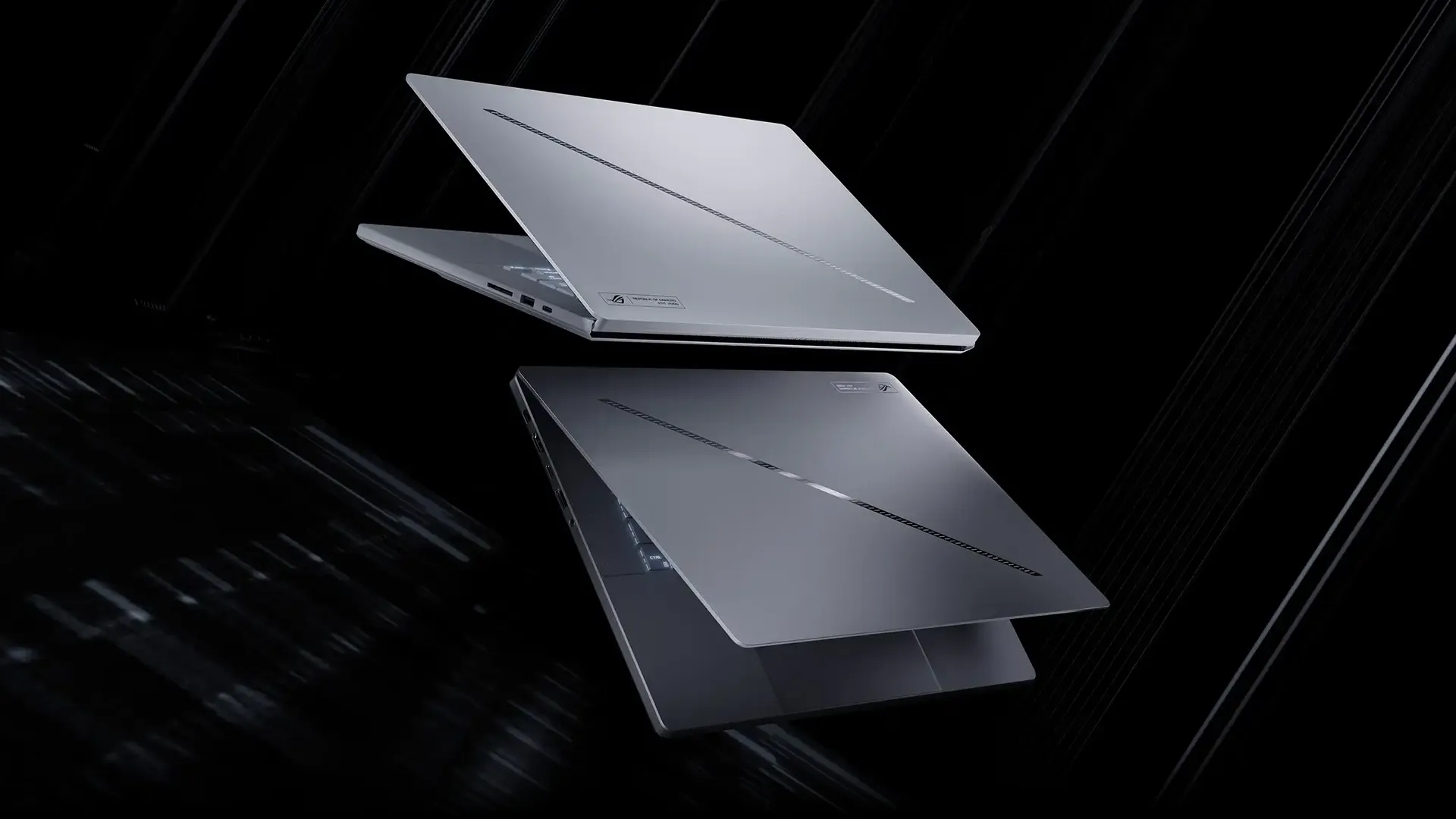
The ASUS ROG Zephyrus G16 represents a compelling compromise for gamers who value portability alongside performance. This ultra-slim 16-inch gaming laptop combines premium aluminum construction with high-end components including Intel Core Ultra 9 or AMD Ryzen AI 9 processors and NVIDIA RTX 40-series GPUs, all housed in a chassis measuring just 1.49 cm thick. The standout 2.5K OLED display with 240Hz refresh rate and Dolby Vision HDR delivers stunning visuals that rival premium ultrabooks. However, the pursuit of slimness comes with trade-offs: the laptop's 115W TDP limitation means it cannot sustain the same performance levels as thicker gaming laptops with higher power budgets. The exceptional six-speaker audio system and lightweight design make it ideal for professionals and students who need gaming capability without sacrificing portability.[1][2][3][4][5][6]
Pros
- Ultra-slim and lightweight design at 1.49 cm thickness with minimal chassis flex
- Exceptional 2.5K OLED display with 240Hz refresh rate, G-Sync, and Dolby Vision HDR support
- Outstanding six-speaker audio system with Dolby Atmos and deep bass response down to 100Hz
- Impressive battery life exceeding 8 hours in video playback tests, outperforming most gaming laptops
- Premium aluminum chassis with high-quality keyboard and glass touchpad
Cons
- Limited 115W TDP results in inconsistent gaming performance compared to higher-wattage competitors
- Thermal constraints cause the laptop to run hotter than rivals during sustained loads
- Non-upgradeable soldered RAM limits future expandability
- Proprietary charging port instead of USB-C power delivery
- Wi-Fi connectivity issues reported by multiple users
The ASUS ROG Zephyrus G16 represents a compelling compromise for gamers who value portability alongside performance. This ultra-slim 16-inch gaming laptop combines premium aluminum construction with high-end components including Intel Core Ultra 9 or AMD Ryzen AI 9 processors and NVIDIA RTX 40-series GPUs, all housed in a chassis measuring just 1.49 cm thick. The standout 2.5K OLED display with 240Hz refresh rate and Dolby Vision HDR delivers stunning visuals that rival premium ultrabooks. However, the pursuit of slimness comes with trade-offs: the laptop's 115W TDP limitation means it cannot sustain the same performance levels as thicker gaming laptops with higher power budgets. The exceptional six-speaker audio system and lightweight design make it ideal for professionals and students who need gaming capability without sacrificing portability.[1][2][3][4][5][6]
Design and Build Quality
The ASUS ROG Zephyrus G16 showcases exceptional craftsmanship through its CNC-machined aluminum chassis, which undergoes a 12-step manufacturing process to achieve its remarkably thin 1.49 cm profile. The minimalist exterior design eschews traditional gaming laptop aesthetics in favor of a professional appearance that works equally well in boardrooms and gaming sessions. Build quality rivals premium ultrabooks like the MacBook Pro, with minimal chassis flex except for slight give in the center of the keyboard deck. The lid opens effortlessly with one finger and exhibits negligible screen wobble during use. Reviewers consistently note the premium feel of materials and precision in assembly that justifies the laptop's positioning in the high-end market segment.[1][2][15][11][14][4][5]
The port selection includes two USB Type-C ports (one Thunderbolt 4, one USB 3.2 Gen 2), two USB Type-A ports, HDMI 2.1, a 3.5mm audio jack, and an SD card reader. The notable omission of an Ethernet port may disappoint gamers who prefer wired connections for online play. The proprietary charging port rather than USB-C power delivery represents a design compromise, requiring users to carry ASUS's substantial 200W power adapter. Internal access proves frustrating as ASUS employs difficult-to-remove screws that complicate user servicing.[20][13][3][8]
Performance in Real Use
Gaming performance on the Zephyrus G16 presents a mixed picture heavily dependent on workload and power mode settings. The laptop's 115W TDP limitation for GPU operation means that even the RTX 4090 configuration cannot match the performance of the same GPU in laptops with 175W power budgets. In titles like Far Cry 6 at 1600p, the G16 maintains strong frame rates around 75 fps, but more demanding scenarios reveal performance inconsistency. Testing with Cyberpunk 2077 shows occasional performance dips during extended play sessions, suggesting thermal throttling impacts sustained gaming.[2][11][5][6]
Productivity performance proves adequate rather than exceptional despite high-end Core Ultra 9 or Ryzen AI 9 processors paired with fast LPDDR5X memory. Cinebench scores trail behind HX-series processor laptops, though real-world differences remain imperceptible during typical workflows. The Intel Arc integrated GPU reaches speeds up to 2.35 GHz, providing sufficient performance for light tasks and content consumption when the dedicated GPU remains dormant. Advanced Optimus graphics switching occasionally causes brief freezes when launching games as the system transitions to the discrete GPU.[1][3][11][4][5]
Performance modes significantly impact both capability and acoustics. Turbo mode enables the laptop to compete more directly with rivals by pushing thermal limits, though competing systems may regain advantages when they similarly max out their power profiles. Battery operation or USB-C power delivery substantially reduces performance, making the configuration suitable only for productivity tasks rather than gaming when away from the dedicated charger.[3][10]
Ease of Use
The keyboard delivers a satisfying typing experience with well-spaced keys, appropriate travel distance, and responsive feedback that suits both gaming and productivity work. Single-zone RGB backlighting provides adequate illumination though lacks the per-key customization found on some competing gaming laptops. The dedicated airplane mode function key represents a thoughtful addition rarely seen on laptops. Some users transitioning from MacBooks note the keyboard feels slightly mushier than Apple's offerings, though most find the typing experience entirely acceptable.[17][11][8][2]
The large glass touchpad impresses with smooth navigation and haptic feedback that eliminates accidental taps while providing consistent click response. As a diving board style touchpad, it represents one of the better implementations of this design approach, though users accustomed to centered trackpads may need adjustment time. Windows gesture support works reliably, with three-finger swipes enabling fluid navigation between virtual desktops. The touchpad's size and responsiveness make it viable for extended periods without requiring an external mouse.[17][2]
ASUS Armoury Crate software provides comprehensive control over performance profiles, RGB lighting, and system monitoring. However, some reviewers note conflicts between Windows power management and Armoury Crate's own power plans that can lead to inconsistent behavior. The software interface proves intuitive for adjusting fan curves and performance settings, though first-time users may require time to understand optimal configurations.[13][6]
Reliability
Thermal management represents the most significant reliability concern for the Zephyrus G16. The ultra-slim chassis struggles to dissipate heat effectively during sustained gaming sessions, with the laptop running noticeably hotter than thicker competitors. Surface temperatures reach 50°C at the rear exhaust vent and 46°C on the underside, though the keyboard area remains at a tolerable 37°C and the trackpad stays cool at 24°C. Higher-end configurations with RTX 4080 and above include vapor chamber cooling that improves thermal performance compared to the three-fan system in lower-spec models.[21][12][13][16][3][4]
Fan noise becomes pronounced under load, with multiple users describing the acoustics as "annoyingly loud" even for office productivity tasks. The third cooling fan produces a particularly irritating high-pitched whine that reviewers specifically call out as problematic. Turbo mode operation results in fan noise that proves distracting in quiet environments, though Performance mode offers better acoustic balance with modest performance reduction.[22][21][10][17][3]
Wi-Fi connectivity issues emerge as a recurring complaint across user reviews. Multiple customers report connection speeds significantly below expected levels and intermittent drops despite updated drivers and settings adjustments. The Intel Wi-Fi 6E AX211 module should deliver strong performance, suggesting potential antenna design issues or software conflicts.[14][5][9]
Build quality remains solid with no widespread reports of hardware failures or manufacturing defects. The soldered RAM configuration eliminates one potential point of failure while simultaneously removing upgrade flexibility. Battery health appears stable with fast charging not causing premature degradation based on available user feedback.[1][19][9]
Use Cases
The Zephyrus G16 excels for professionals and students who require gaming capability within a portable, office-appropriate form factor. The sleek design and lightweight construction make it viable for daily commuting and travel without the bulk associated with traditional gaming laptops. Business users who game occasionally will appreciate the ability to maintain a professional appearance while still enjoying AAA titles during downtime.[15][12][2][3]
Content creators benefit from the exceptional OLED display with 100% DCI-P3 color coverage and PANTONE validation, making it suitable for photo and video editing work requiring color accuracy. The six-speaker audio system with Dolby Atmos proves ideal for media consumption, delivering sound quality that eliminates the need for external speakers during casual viewing. Creative workflows involving Adobe applications run smoothly, though rendering times trail purpose-built mobile workstations.[7][8][5][1]
Competitive gamers seeking maximum frame rates should look elsewhere due to the thermal and power limitations. However, single-player enthusiasts who prioritize visual quality over absolute performance will find the OLED display and good-enough gaming capability satisfying. The laptop handles modern titles at high settings when resolution is set appropriately, making it viable for gamers who value portability over peak performance.[12][4][6][19][9]
The lightweight design proves particularly appealing for LAN party attendees and hotel gaming during business travel. Battery life exceeding eight hours during productivity use enables full-day operation without access to power outlets, distinguishing it from power-hungry desktop replacements.[10][3][9]
Long-Term Ownership Feedback
Users who purchased the G16 months after release report continued satisfaction with display quality and build integrity. The OLED panel shows no signs of burn-in among reviewers who have used the laptop extensively, though ASUS includes OLED care features to mitigate this risk. One customer was sufficiently satisfied to purchase a second unit, indicating strong real-world reliability.[2][19][9]
Storage upgrade proves straightforward with two M.2 slots available, allowing users to address the limited base storage capacity. Adding secondary SSDs costs substantially less than factory upgrades while providing flexibility to expand capacity as needs evolve. However, the soldered RAM configuration represents a permanent limitation that cannot be addressed through user upgrades.[11][13][19][1]
Thermal paste quality and long-term thermal performance remain unknown due to the laptop's relative newness in the market. Users considering long-term ownership should anticipate potential thermal paste replacement after one to two years of intensive use to maintain optimal cooling performance.[13]
Software update reliability appears solid with no widespread reports of problematic BIOS or driver updates. However, some users note occasional Windows update compatibility issues that temporarily prevent system updates from completing successfully. Linux support exists though requires configuration effort and may not deliver the same performance as Windows due to driver maturity.[5][19][9]
The proprietary charging port raises concerns about long-term serviceability and adapter replacement costs. Users should consider purchasing a spare adapter given the impossibility of universal USB-C charging as a backup option.[8][3]
| Specification | Details |
|---|---|
| Processor | Intel Core Ultra 9 185H or AMD Ryzen AI 9 HX 370 [18][4] |
| Graphics | NVIDIA GeForce RTX 4060/4070/4080/4090 Laptop GPU (115W TDP) [7][5] |
| Display | 16-inch, 2560 x 1600, OLED, 240Hz, G-Sync, Dolby Vision HDR, 0.2ms response time [7][2] |
| Memory | 16GB or 32GB LPDDR5X RAM (soldered) [1][7] |
| Storage | 512GB to 2TB PCIe 4.0 NVMe SSD [5][7] |
| Audio | Six-speaker system with Dolby Atmos, 100Hz bass frequency [8][5] |
| Battery | 90Wh with fast charging (0-50% in 30 minutes) [1] |
| Dimensions | 1.49 cm thickness [1] |
| Connectivity | Wi-Fi 6E, Bluetooth 5.3, 2x USB-C, 2x USB-A, HDMI 2.1, SD card reader [5][8] |
| Materials | CNC-machined aluminum chassis [1] |
Buy
- You prioritize portability and need a gaming laptop that doesn't look or feel like traditional gaming hardware[3][15]
- You value display quality and want one of the best OLED panels available in gaming laptops[4][9]
- You require excellent battery life for productivity work between gaming sessions[10][9]
- You need powerful speakers for media consumption and prefer not to use external audio[5][8]
- You want a laptop suitable for both professional environments and gaming[15][2]
Skip
- You need maximum gaming performance and prefer sustained high frame rates over portability[6][12]
- You plan to upgrade RAM in the future as the memory is soldered and non-expandable[13][1]
- You require consistently quiet operation in office environments as fans can become loud under load[16][17]
- You want USB-C charging compatibility and dislike carrying proprietary power adapters[8]
- You need rock-solid Wi-Fi connectivity for competitive online gaming[14][9]
Critic Reviews
No reviews yet.
User Reviews
No reviews yet.