
Sony BRAVIA 9 (K-65XR90, K-75XR90, K-85XR90)
Sony's flagship Mini-LED TV delivers exceptional brightness, OLED-rivaling contrast, and refined local dimming in a package that redefines what LCD technology can achieve for home cinema enthusiasts.
Updated January 28, 2026
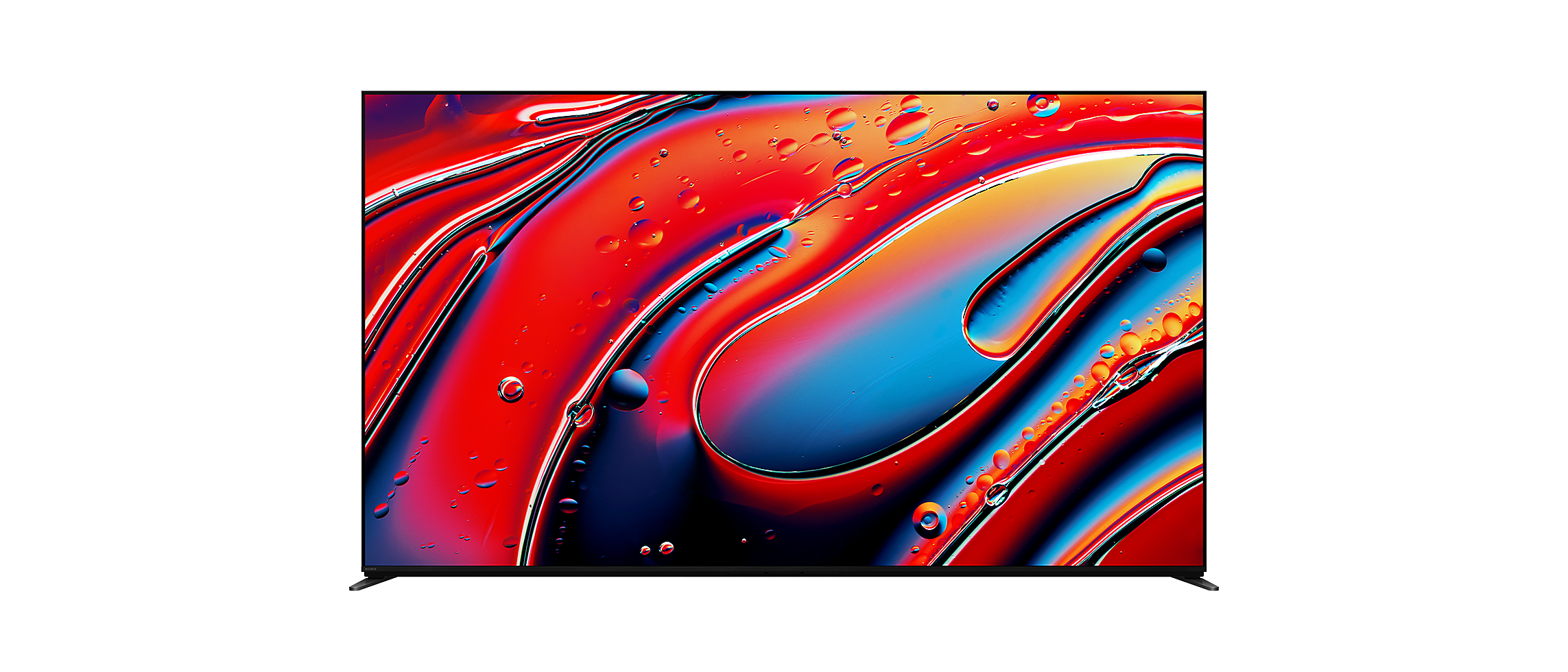
The Sony BRAVIA 9 represents Sony's most ambitious foray into Mini-LED technology, featuring the company's XR Backlight Master Drive system that controls thousands of individually-addressable LEDs with precision borrowed from professional mastering monitors. This flagship model achieves record-breaking brightness levels while maintaining exceptional black depth and minimal blooming, characteristics typically reserved for OLED displays. With measured peak HDR brightness exceeding 2,200 nits and outstanding color accuracy, the BRAVIA 9 delivers a cinematic experience that satisfies both enthusiast videophiles and everyday viewers. The TV runs Google TV, includes beam tweeters for enhanced audio, and supports gaming features like 4K at 120Hz with VRR on two HDMI 2.1 ports. While it carries inherent LCD limitations like narrower viewing angles and occasional blooming in specific game modes, the BRAVIA 9's combination of Mini-LED brightness with Sony's industry-leading processing makes it one of the most compelling high-end LCD televisions available.[1][2][3][4][5][6]
Pros
- Exceptional brightness with HDR highlights: Measured peak brightness of 2,280 nits in Standard mode and 1,871 nits in Movie mode, making it Sony's brightest TV ever with excellent HDR impact
- OLED-like black levels with minimal blooming: XR Backlight Master Drive delivers exceptional local dimming control with deep blacks and almost no backlight bloom in cinema modes
- Outstanding color accuracy and processing: Near-perfect EOTF tracking, excellent color volume in DCI-P3, and industry-leading upscaling capabilities for lower-resolution content
- Superior motion handling and processing: XR Motion Clarity and Sony's image processing deliver smooth motion with minimal blur, particularly effective in cinema modes
- Impressive built-in audio system: First TV featuring beam tweeters with excellent vocal clarity, directional sound, and height effects that surpass typical TV speakers
Cons
- Limited HDMI 2.1 connectivity: Only two of four HDMI ports support 4K at 120Hz, VRR, and full gaming features
- Narrow viewing angle for LCD: Despite X-Wide Angle technology, significant color washout and contrast degradation occurs at off-axis viewing positions
- Slower pixel response in gaming: Slower pixel transitions compared to OLED result in motion blur during fast-paced gaming, particularly at 60Hz
- Reduced local dimming precision in game mode: Local dimming becomes less refined in Game/Graphics mode to maintain lower input lag, resulting in occasional blooming with bright objects on dark backgrounds
- Higher input lag than competitors: 18ms input lag at 60Hz and 9ms at 120Hz, which is higher than competing gaming-focused displays
The Sony BRAVIA 9 represents Sony's most ambitious foray into Mini-LED technology, featuring the company's XR Backlight Master Drive system that controls thousands of individually-addressable LEDs with precision borrowed from professional mastering monitors. This flagship model achieves record-breaking brightness levels while maintaining exceptional black depth and minimal blooming, characteristics typically reserved for OLED displays. With measured peak HDR brightness exceeding 2,200 nits and outstanding color accuracy, the BRAVIA 9 delivers a cinematic experience that satisfies both enthusiast videophiles and everyday viewers. The TV runs Google TV, includes beam tweeters for enhanced audio, and supports gaming features like 4K at 120Hz with VRR on two HDMI 2.1 ports. While it carries inherent LCD limitations like narrower viewing angles and occasional blooming in specific game modes, the BRAVIA 9's combination of Mini-LED brightness with Sony's industry-leading processing makes it one of the most compelling high-end LCD televisions available.[1][2][3][4][5][6]
Design and Build Quality
The Sony BRAVIA 9 showcases premium construction that reflects its flagship positioning within Sony's television lineup. The television features a minimalist aesthetic with slim bezels that maximize screen real estate while maintaining structural integrity across the 65-inch, 75-inch, and 85-inch variants. Build quality mirrors the standards established in Sony's professional monitor division, with particular attention paid to thermal management given the extreme brightness capabilities of the Mini-LED backlight system.[18][6][1][7]
The panel incorporates Sony's X-Wide Angle technology, a specialized optical layer designed to improve off-axis viewing performance beyond what standard VA-type LCD panels typically achieve. While this technology does provide measurable improvement compared to Mini-LED televisions without viewing angle enhancement, the BRAVIA 9 still exhibits the characteristic contrast and color saturation loss inherent to LCD technology when viewed from significant angles. Users positioned within a 30-degree cone from center viewing position report excellent image fidelity, but those seated at 45 degrees or more will notice degradation.[21][9][10][2][5]
The television's stand system provides stable support and cable management options, though wall mounting remains popular given the display's premium positioning in dedicated home theater environments. The overall industrial design emphasizes understated elegance rather than aggressive gaming aesthetics, aligning with Sony's philosophy of letting picture quality take center stage.[18]
Mini-LED Technology and Backlight Performance
At the heart of the BRAVIA 9's exceptional performance lies Sony's XR Backlight Master Drive system, which represents a significant advancement in consumer Mini-LED implementation. This technology directly borrows backlight control algorithms from Sony's professional BVM-XH3110 mastering monitors used in post-production facilities for final color grading and quality verification. The system controls thousands of individually addressable Mini-LED zones, though Sony has not disclosed the precise zone count.[22][6][3]
The implementation includes a revolutionary backlight driver that Sony claims enables 50 percent higher brightness output compared to the previous-generation X95L, alongside a 320 percent increase in local dimming zones. These hardware improvements combine with Sony's XR processor to deliver local dimming performance that professional reviewers consistently describe as "OLED-like" in most real-world content.[23][24][4][5][3]
Measured brightness performance validates Sony's marketing claims, with TechRadar recording peak HDR brightness of 2,280 nits in Standard mode and 1,871 nits in Movie mode on a 10 percent window. Digital Trends confirmed near-perfect PQ EOTF tracking in Professional mode, indicating accurate tone mapping without artificial brightness inflation. In SDR content, the display can produce 100 nits in Professional mode for reference-accurate presentation, or scale up to 400 nits in Cinema mode for comfortable viewing in ambient lighting.[4][3]
The local dimming algorithm demonstrates particular sophistication in Cinema, Professional, and Dolby Vision modes, where blooming around bright objects against dark backgrounds remains minimal even during challenging test patterns like starfields and white-on-black title cards. Reviewers note that while perfect pixel-level control remains exclusive to self-emissive OLED technology, the BRAVIA 9 achieves closer proximity to that ideal than any previous LCD television they had tested.[1][5][3][4]
Gaming Performance and Limitations
The BRAVIA 9 includes comprehensive gaming features that position it as PlayStation 5's ideal companion display, though competitive PC gamers may find certain performance characteristics limiting. Two of the four HDMI ports support the full HDMI 2.1 specification, enabling 4K resolution at 120Hz refresh rate, Variable Refresh Rate for stutter elimination, and Auto Low Latency Mode for automatic picture mode switching.[9][11][3]
PlayStation 5 owners benefit from Auto HDR Tone Mapping and Auto Genre Picture Mode features that optimize display settings based on game content without manual intervention. The Game Menu provides quick access to black equalizer settings, motion blur reduction controls, and aspect ratio adjustments. Users report that the black equalizer set to "low" provides optimal visibility in dark game environments without sacrificing contrast excessively.[13][9][3]
However, the television's gaming performance includes measurable compromises compared to OLED alternatives and dedicated gaming monitors. Input lag measures 18 milliseconds at 60Hz and 9 milliseconds at 120Hz in Game mode, which exceeds competing models from LG that achieve roughly half those figures. RTINGS testing confirms that pixel response times rank among the slowest in the Mini-LED category, resulting in motion blur during fast camera panning and rapid on-screen movement.[12][2][11]
The local dimming algorithm operates less aggressively in Game mode to maintain lower input latency, resulting in more visible blooming around bright HUD elements and light sources against dark backgrounds compared to cinema modes. Users can activate higher local dimming settings to reduce blooming at the cost of slightly dimming small highlights. The television supports Black Frame Insertion at 60Hz and 120Hz to reduce motion blur through brief backlight strobing, though this feature introduces perceivable flicker that some users find fatiguing during extended sessions.[11]
The absence of 144Hz support limits appeal for high-refresh-rate PC gaming, and only two HDMI 2.1 ports may prove restrictive for households with multiple next-generation consoles and gaming PCs requiring simultaneous connection. Despite these technical limitations, console gamers prioritizing picture quality over competitive response times report high satisfaction with the overall gaming experience.[13][9][8][11]
Color Accuracy and HDR Performance
Sony's reputation for color science excellence continues with the BRAVIA 9, which delivers exceptional color accuracy that aligns with professional mastering standards. The television provides near-perfect coverage of the DCI-P3 color gamut used in HDR content production, with only minor limitations in extreme Rec. 2020 coverage at very high luminance levels - a characteristic shared by all current LCD technology.[5][4][11]
HDR EOTF tracking in Professional mode follows the reference curve with remarkable precision throughout the brightness range, indicating that the television respects creative intent without artificial brightness boosting. Cinema mode tracks slightly above the reference curve to deliver enhanced brightness across the board, a deliberate tuning decision that most viewers prefer while still maintaining relative tone mapping accuracy.[4]
Color volume performance demonstrates the fundamental advantage of Mini-LED brightness combined with quantum dot technology, enabling saturated colors at extremely high luminance levels that OLED displays cannot physically achieve. This capability proves particularly impactful in HDR content featuring vibrant daytime scenes, neon signage, and fire effects where both saturation and brightness peak simultaneously.[3][5][4]
The television supports HDR10, HLG, and Dolby Vision formats, with Dolby Vision Gaming enabling dynamic metadata during PlayStation 5 gameplay. Multiple Dolby Vision picture modes (Vivid, Bright, Dark, Game) allow users to select presentations optimized for different viewing conditions. Professional reviewers recommend Professional or Cinema modes for critical viewing, while casual viewers often prefer Standard or Vivid modes that emphasize brightness and color saturation.[18][3][4]
Upscaling and Motion Processing
Sony's XR processor incorporates machine learning algorithms that analyze content in real-time to apply optimized upscaling and motion processing. RTINGS rates the upscaling capabilities as "exceptional," noting that 1080p content displays with clarity and detail retention that approaches native 4K presentation. Lower-quality streaming content benefits from sophisticated noise reduction and compression artifact mitigation without introducing excessive softening.[2]
The XR Motion Clarity system addresses the inherent sample-and-hold motion blur characteristic of LCD panels through backlight manipulation rather than frame interpolation. Users report effective motion handling in cinema modes, with smooth panning and tracking during action sequences. The television offers both automatic motion processing and manual control over interpolation intensity for users who prefer complete control over motion characteristics.[9][1][18][4]
Professional reviewers noted that motion handling excellence in cinema modes contrasts with the slower pixel response in Game mode, where the television prioritizes input latency over motion clarity. This dual-mode optimization reflects Sony's understanding that gaming and film content demand different performance priorities.[2][11]
Audio Performance
The BRAVIA 9 includes Sony's most advanced built-in audio system, featuring the world's first Beam Tweeter implementation in a consumer television. This technology creates height effects and directional audio that significantly surpasses typical television speakers. What Hi-Fi praised the "excellent vocal clarity and low-level dynamics" during reference testing, noting the ability to aurally place sound sources with precision.[1][18]
The Voice Zoom 3 feature provides adjustable dialogue enhancement that makes speech more prominent without excessively compressing dynamic range or suppressing environmental effects. The system achieves adequate volume output to fill medium-sized rooms, though dedicated soundbar or surround sound systems remain recommended for home theater purists seeking reference-level audio.[7][1]
The television supports eARC through HDMI for lossless audio passthrough to external audio equipment, alongside Toslink optical output for legacy audio connections. Users report that the built-in audio provides a surprisingly capable solution for casual viewing, reducing the immediate necessity for external audio investment.[20][13][9]
Smart Platform and User Interface
The BRAVIA 9 runs Google TV, providing access to comprehensive streaming services, voice control through Google Assistant, and Chromecast functionality for content casting from mobile devices. The interface provides straightforward navigation with content recommendations aggregated from subscribed services.[18]
Users note that optimizing picture settings requires time investment given the extensive customization options across multiple picture modes and input sources. The television remembers settings per input and content type, reducing the need for constant adjustment once initial calibration is complete. An Eco Dashboard monitors power consumption and provides consolidated access to energy-saving features.[6][14][13]
Connectivity includes four HDMI ports, two USB inputs, Ethernet, Wi-Fi, and Bluetooth, supporting diverse source device configurations. The two HDMI 2.0b ports provide adequate bandwidth for 4K 60Hz sources including streaming devices and older gaming consoles.[9]
Long-Term Ownership and Reliability
Four-month ownership reports from Reddit users indicate consistent performance without degradation or technical failures. The Mini-LED backlight technology eliminates burn-in concerns that affect OLED displays, providing peace of mind for users with static content exposure from gaming HUDs, news tickers, or computer desktop usage.[13][11]
Users describe the television as "future-proof" given that 8K content adoption remains limited and 4K HDR content continues to represent the high-quality streaming and physical media standard. The combination of exceptional upscaling, comprehensive HDR format support, and gaming features positions the television to remain relevant throughout extended ownership periods.[13]
Power consumption varies significantly based on content and picture mode selection, with the XR Backlight Master Drive's zone-specific dimming providing efficiency advantages over full-array backlights that illuminate unused zones. Ambient light sensing automatically adjusts brightness based on room lighting conditions, balancing picture impact with energy consumption.[6]
Comparative Context
Professional reviewers consistently position the BRAVIA 9 as the strongest Mini-LED television available, surpassing competing models from Samsung, Hisense, and TCL in contrast control and blooming suppression. The television challenges OLED displays in overall picture quality for most content types, with OLED maintaining advantages only in perfect black level capability, pixel response time, and viewing angle.[12][5][4]
Users who considered Sony's A95L QD-OLED frequently selected the BRAVIA 9 for larger screen sizes, higher brightness in ambient lighting, and elimination of burn-in concerns, accepting the trade-offs in viewing angle and motion response. The television's brightness advantage proves particularly relevant in rooms with window exposure or ambient lighting where OLED displays struggle to maintain adequate image impact.[11][3][13]
The BRAVIA 9 represents Sony's successful demonstration that Mini-LED technology, when executed with professional-grade processing and backlight control, can deliver picture quality that satisfies even critical videophiles who previously considered only OLED technology acceptable for serious home theater applications.[7][5][4]
| Specification | Details |
|---|---|
| Display Technology | Mini-LED with XR Backlight Master Drive |
| Screen Sizes | 65", 75", 85" |
| Resolution | 4K Ultra HD (3840 x 2160) |
| Refresh Rate | Native 120Hz |
| HDR Support | HDR10, HLG, Dolby Vision, Dolby Vision Gaming |
| Peak Brightness | 2,280 nits (Standard), 1,871 nits (Movie) [3] |
| HDMI Ports | 4 total (two HDMI 2.1, two HDMI 2.0b) [9] |
| Gaming Features | 4K@120Hz, VRR, ALLM, Auto HDR Tone Mapping |
| Motion Technology | XR Motion Clarity, Motion Blur Reduction |
| Audio System | Beam Tweeter technology, Voice Zoom 3 [1] |
| Smart Platform | Google TV |
| Connectivity | Wi-Fi, Ethernet, Bluetooth, 2x USB [9] |
| X-Wide Angle | Yes (viewing angle enhancement) [9] |
| Local Dimming Zones | Thousands (specific count not disclosed) [6] |
Buy
- Home theater enthusiasts seeking cinema-quality brightness: The combination of extreme brightness and accurate color tracking makes HDR content stunning without sacrificing shadow detail[3][4][5]
- Viewers prioritizing picture accuracy: Sony's professional-grade processing and color science deliver creator-intended visuals with minimal artificial enhancement[4][5][11]
- Those wanting to avoid OLED burn-in risks: Mini-LED technology eliminates burn-in concerns for users with static content, gaming HUDs, or extended usage patterns[13][11]
- Bright room viewing environments: Superb SDR brightness and excellent reflection handling make it effective in rooms with indirect lighting[8][2][3]
- Console gamers seeking excellent all-around performance: PlayStation 5 optimization, Auto HDR Tone Mapping, and solid gaming features deliver strong gaming capabilities[3][11]
Skip
- Competitive PC gamers requiring fastest response: Slower pixel transitions and higher input lag compared to dedicated gaming monitors or OLED TVs may impact competitive gaming[12][2][11]
- Wide seating arrangements requiring perfect off-axis viewing: Limited viewing angle means image degradation for viewers sitting significantly off-center[10][5][2]
- Those prioritizing maximum HDMI 2.1 ports: Only two HDMI 2.1 ports may be limiting for users with multiple next-gen consoles and PC gaming setups[9][8][2]
- Viewers seeking 144Hz support: Lack of 144Hz refresh rate limits appeal for high-end PC gaming enthusiasts[8]
- Those preferring immediate perfect settings: Extensive customization options require time to dial in optimal picture settings for different content types[14]
Critic Reviews
No reviews yet.
User Reviews
No reviews yet.