Premium OLED TVs That Deliver Perfect Blacks and Vivid Color for Cinematic Home Viewing
Created January 12, 2026 • Updated February 14, 2026
Expert-tested models deliver stunning brightness, true blacks, and vivid colours, with advanced anti-glare screens and features tailored for cinephiles and gamers alike.
Rank#01
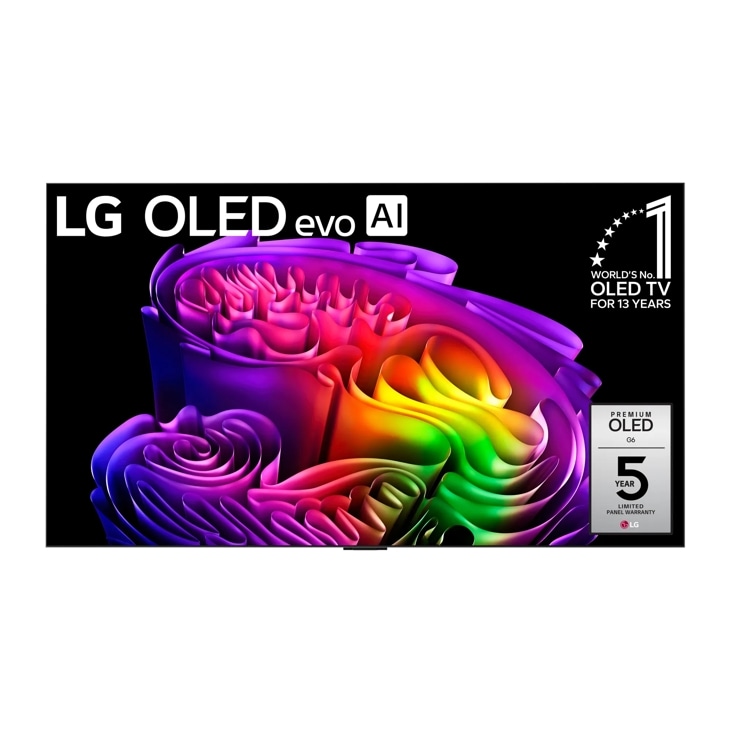
LG G5 OLED evo
LG's flagship OLED delivers unprecedented brightness levels and gaming performance, though its premium positioning demands careful consideration of viewing habits and budget constraints.
Shrook Score
85
Generally Favorable
Shrook Score
85
Generally Favorable
Published December 31, 2025 • Updated January 28, 2026
The LG G5 OLED Evo represents a landmark achievement in television engineering, introducing the industry's first primary RGB tandem OLED panel to consumer displays. This flagship model from LG's 2025 lineup reaches peak brightness levels of 2,268 nits, rivalling premium mini-LED televisions while maintaining the perfect black levels that define OLED technology. Powered by the Alpha 11 AI Processor Gen 2, the G5 supports 4K resolution at 165Hz across all four HDMI 2.1 ports, making it a formidable choice for gaming enthusiasts. Professional reviewers consistently praise its exceptional picture quality, improved anti-reflection coating, and sophisticated AI-driven features through webOS 25. However, the television's premium positioning brings compromises, including the removal of DTS audio support and a minimalist remote that frustrates some users. Consumer feedback reveals that while the display technology impresses, Filmmaker Mode can render Dolby Vision content uncomfortably dark, requiring manual adjustment from factory settings. The G5's flush-wall design and striking visual performance make it a centrepiece television, but its substantial investment demands careful alignment with viewing environments and content consumption patterns.
Pros
Record-breaking brightness: Peak HDR brightness reaches 2,268 nits on 10% windows, exceeding previous OLED standards by substantial margins and matching premium mini-LED performance
Perfect contrast ratio: Self-lit OLED pixels deliver infinite contrast with absolute black levels, creating exceptional depth and dimensionality in dark scenes
Superior gaming capabilities: Native 4K at 165Hz with HDMI 2.1 bandwidth on all four ports, sub-5ms input lag at 120Hz and 165Hz, plus VRR support across NVIDIA G-Sync, AMD FreeSync, and HDMI Forum VRR
Enhanced color purity: Primary RGB tandem OLED structure improves color separation and vibrancy compared to previous WOLED panels, delivering more accurate and punchy color reproduction
Premium flush-wall design: Gallery-style one-wall mounting system sits completely flat against walls, creating a picture-frame aesthetic without visible gaps
Cons
Extreme price premium: Positioned at the top of LG's 2025 lineup with costs substantially exceeding mid-range alternatives like the C5, limiting accessibility
DTS audio removal: LG eliminated DTS format support across their entire 2025 OLED range, affecting compatibility with physical media collections
Filmmaker Mode darkness: Dolby Vision content appears overly dark in Filmmaker Mode, requiring user intervention and adjustment to achieve comfortable viewing
Inferior remote control: The minimalist remote lacks an input select button and receives consistent criticism for reduced functionality compared to previous generations
Modest built-in audio: While clear and adequately loud, the integrated speaker system doesn't match the premium quality expected at this price point
Sony's second-generation QD-OLED delivers exceptional brightness, color accuracy, and processing that outperforms most competitors, though limited HDMI 2.1 connectivity and higher input lag may deter serious gamers.
Shrook Score
90
Universal Acclaim
Shrook Score
90
Universal Acclaim
Published December 31, 2025 • Updated January 28, 2026
The Sony BRAVIA XR A95L represents the pinnacle of consumer television technology, combining a second-generation Quantum Dot OLED panel with Sony's Cognitive Processor XR to create one of the most critically acclaimed displays of recent years. This flagship model delivers exceptional HDR brightness - up to 200% brighter than its predecessor - while maintaining the perfect blacks and near-infinite contrast ratio inherent to OLED technology. What distinguishes the A95L from competitors is Sony's legendary video processing, which excels at upscaling lower-resolution content, handling motion without artifacts, and preserving the filmmaker's intent with remarkable color accuracy. The TV arrives with Google TV integration, Acoustic Surface Audio+ technology that vibrates the screen to emit sound, and a BRAVIA CAM for gesture control and ambient optimization. While the A95L commands premium positioning, it faces practical limitations: only two HDMI 2.1 ports (with one shared with eARC) frustrate users with multiple next-gen gaming consoles, and input lag measures higher than competing Samsung and LG models. Initial vertical banding issues on dark content have been reported by some users, though these typically resolve after several months of use. Despite these concerns, professional reviewers and consumers consistently praise the A95L as delivering reference-quality imagery that justifies consideration for cinephiles and discerning viewers who prioritize picture fidelity above all else.
Pros
Exceptional color accuracy and brightness: The QD-OLED panel delivers vibrant, lifelike colors with impressive HDR peak brightness that makes highlights truly pop, while maintaining accuracy to the filmmaker's intent without calibration
Outstanding video processing: Sony's Cognitive Processor XR provides industry-leading upscaling of HD and lower-resolution content, superior motion handling, and intelligent picture enhancement that competitors struggle to match
Perfect blacks and contrast: OLED technology with near-infinite contrast ratio delivers inky blacks and exceptional shadow detail, creating depth and dimensionality in every scene
Wide viewing angles: The QD-OLED panel maintains luminance and color consistency across all viewing angles, superior to traditional OLED displays
Premium build quality and audio: Acoustic Surface Audio+ technology vibrates the screen for sound that appears to come directly from on-screen action, while the One Slate design delivers reassuring premium aesthetics
Cons
Limited HDMI 2.1 connectivity: Only two HDMI 2.1 ports with one shared with eARC severely restricts connectivity for users with multiple gaming consoles, PCs, or home theater equipment
Higher input lag than competitors: Measured at 16.1ms, input lag exceeds competing LG and Samsung models that easily achieve under 10ms, potentially impacting competitive gaming performance
Initial vertical banding issues: Some units exhibit vertical banding on dark scenes out of the box, requiring 4-5 months of regular use for the panel to settle and the issue to resolve
Motion stutter in cinematic content: The nearly instantaneous pixel response time can create noticeable stutter in 24fps movies and television shows
Premium pricing without full feature parity: Lacks Filmmaker Mode and ships with some deep calibration features unavailable at launch, while commanding the highest price point in the OLED category
Samsung's 2025 flagship QD-OLED delivers unprecedented brightness and exceptional glare reduction, making it the most compelling choice for bright room viewing while maintaining the inky blacks OLED technology promises.
Shrook Score
89
Generally Favorable
Shrook Score
89
Generally Favorable
Published December 31, 2025 • Updated January 28, 2026
The Samsung S95F represents the pinnacle of the brand's OLED evolution, featuring a fourth-generation QD-OLED panel that pushes brightness boundaries while eliminating reflections through an improved matte coating. This 2025 flagship achieves what seemed impossible: an OLED that excels in sunlit rooms without sacrificing the deep contrast and vibrant colors that define premium display technology. Powered by Samsung's NQ4 AI Gen3 processor and supporting up to 165Hz refresh rates, the S95F targets discerning viewers who refuse to compromise between daytime usability and cinematic picture quality. While the absence of Dolby Vision and minor shadow detail limitations prevent perfection, this television delivers a viewing experience that competes with any display on the market.
Pros
Exceptional peak brightness reaching 2000-2400 nits in HDR, making highlights pop with unusual intensity for OLED technology
Industry-leading OLED Glare Free 2.0 coating essentially eliminates reflections from windows and lights, transforming bright room performance
Vibrant quantum dot color reproduction maintains saturation even in well-lit environments without appearing overprocessed
Outstanding gaming performance with 165Hz refresh rate, near-instantaneous response time, and support for all VRR formats
Premium ultra-thin design with versatile One Connect box simplifies installation and cable management
Cons
No Dolby Vision HDR support limits compatibility with popular streaming content mastered in that format
Noticeable black crush in shadow details, with some dark scene gradation lost to pure black
Matte coating raises black levels in bright rooms, creating a slightly grayish appearance compared to glossy OLEDs
Forced edge enhancement cannot be disabled in any picture mode, occasionally creating artificial sharpening
Built-in speakers distort at higher volumes and lack sufficient bass for cinematic content
LG's latest mid-range OLED combines improved brightness, near-perfect color accuracy, and comprehensive gaming features in a sleek package that challenges more expensive models.
Shrook Score
90
Universal Acclaim
Shrook Score
90
Universal Acclaim
Published December 31, 2025 • Updated January 28, 2026
The LG C5 OLED represents a meaningful step forward for LG's most popular OLED series, delivering noticeably improved brightness over its predecessor while maintaining the perfect blacks and vibrant colors that define OLED technology. Powered by the α9 AI Processor 4K Gen8, this television excels in dark room viewing with its infinite contrast ratio and impresses with significantly enhanced SDR and HDR brightness that makes it more viable in well-lit spaces. Four full-bandwidth HDMI 2.1 ports support 4K/144Hz gaming with VRR and ALLM, cementing its position as a top choice for console and PC gamers. While it doesn't match the peak brightness of mini-LED rivals or higher-end QD-OLED panels, the C5 strikes an appealing balance between performance and value for viewers who prioritize cinematic picture quality and gaming versatility.
Pros
Significantly improved brightness: The C5 delivers noticeably higher SDR and HDR brightness compared to the C4, with HDR peaks reaching approximately 1,165 nits versus the C4's 1,049 nits, making highlights pop more effectively
Near-perfect color accuracy: Out-of-the-box color accuracy measures exceptionally well, with a Delta-E average of 0.32 in SDR and over 99% Rec. 709 coverage, requiring minimal calibration
Comprehensive gaming features: Four HDMI 2.1 ports supporting 4K/144Hz, VRR, ALLM, NVIDIA G-Sync, AMD FreeSync Premium, and extremely low input lag make it ideal for gaming
Excellent image processing: The α9 AI Processor Gen8 delivers superior upscaling of lower-resolution content and effective artifact removal from streaming sources
Perfect black levels and infinite contrast: As an OLED panel with 8.3 million self-lit pixels, the C5 delivers absolute blacks with no blooming, creating exceptional depth in dark scenes
Cons
Lower full-screen brightness: While improved, the C5 still lags behind mini-LED competitors in full-field brightness, measuring around 300-1000 nits in many HDR scenes versus 3,000+ nits from high-end LCD displays
Smaller models less bright: The 42-inch and 48-inch variants feature lower pixel aperture ratios, resulting in noticeably reduced brightness compared to larger screen sizes
Visible stutter in 24fps content: The near-instantaneous response time causes noticeable judder during slow camera pans in movies, an inherent OLED characteristic
Suboptimal for very bright rooms: Despite brightness improvements, the C5 remains best suited for controlled lighting environments and struggles with direct reflections more than anti-glare mini-LED options
Dithering visible at close range: Diagonal lines show visible dithering patterns when used as a PC monitor at typical desk distances, limiting its effectiveness for desktop use
A flagship MLA OLED TV that combines exceptional brightness with authentic color accuracy, powerful built-in Dolby Atmos sound, and 144Hz gaming performance, marking Panasonic's triumphant return to premium television.
Shrook Score
90
Universal Acclaim
Shrook Score
90
Universal Acclaim
Published December 31, 2025 • Updated January 28, 2026
The Panasonic Z95A OLED represents Panasonic's bold re-entry into the premium television market after years of absence from North America. Built on LG Display's second-generation META Gen 2 MLA (Micro Lens Array) panel technology, this flagship OLED achieves exceptional peak brightness levels approaching 1,600-1,700 nits while maintaining the deep blacks and infinite contrast OLED is known for. The Z95A distinguishes itself through Panasonic's commitment to picture authenticity and filmmaker intent, powered by the HCX Pro AI Processor MK II that delivers outstanding upscaling and image processing. A unique 160W integrated soundbar with 360° Soundscape Pro delivers impressive Dolby Atmos audio that rivals dedicated sound systems. Gaming enthusiasts benefit from a 144Hz panel refresh rate, VRR support, and dedicated game modes with remarkably low input lag. While the Fire TV operating system and limited HDMI 2.1 ports present minor compromises, the Z95A stands as one of the most complete OLED packages available, particularly for viewers who prioritize accurate, cinema-quality picture performance.
Pros
Exceptional HDR brightness: MLA panel technology delivers 1,600-1,700 nits peak brightness with outstanding contrast, making HDR highlights pop without sacrificing OLED's signature deep blacks
Reference-grade color accuracy: Outstanding out-of-box calibration with Professional modes delivering near-perfect color accuracy and filmmaker-intended picture quality
Superior image processing: HCX Pro AI Processor MK II provides excellent upscaling from SD to 4K, strong low-quality content smoothing, and minimal banding in HDR gradients
Built-in premium audio: 160W integrated soundbar with 360° Soundscape Pro and Dolby Atmos delivers best-in-class TV audio that rivals external sound systems
Advanced gaming features: 144Hz panel, VRR support, ALLM, incredibly low input lag under 10ms at 120Hz/144Hz, and Dolby Vision gaming mode
Cons
Aggressive brightness limiting: ABL (Automatic Brightness Limiter) significantly dims large bright scenes, with sustained brightness dropping from 1,700 to 700 nits after several minutes
Limited HDMI 2.1 connectivity: Only two of four HDMI ports support full 48Gbps HDMI 2.1 bandwidth, restricting multi-device high-refresh setups
Fire TV interface limitations: Amazon Fire TV OS includes intrusive advertisements, limited app selection, and less intuitive navigation compared to competitors
Occasional motion artifacts: Some users report minor stuttering in fast-paced scenes and slight inverse ghosting in darker gaming content
Outdated remote control: Basic plastic remote lacks premium feel and has inconsistent button functionality across streaming apps
Four-sided Ambilight and premium Bowers \& Wilkins audio elevate this bright MLA OLED TV, but limited ports, missing apps, and pricing versus the step-down OLED809 complicate its value proposition.
Shrook Score
84
Generally Favorable
Shrook Score
84
Generally Favorable
Published December 31, 2025 • Updated January 28, 2026
The Philips OLED909 represents a high-performance OLED television equipped with second-generation MLA panel technology, four-sided Ambilight lighting, and an integrated Bowers \& Wilkins 3.1-channel sound system. This 2024 model features the 8th generation P5 AI processor, delivers peak brightness measurements exceeding 1,400 nits, and supports comprehensive HDR formats including Dolby Vision and HDR10+. Available exclusively in European markets in 55-inch, 65-inch, and 77-inch configurations, the OLED909 targets enthusiasts seeking premium picture quality combined with distinctive ambient lighting and superior built-in audio. Despite exceptional technical capabilities, the television faces intense competition from similarly priced flagship models while delivering picture quality remarkably close to its more affordable OLED809 sibling.
Pros
Second-generation MLA OLED panel achieves measured peak brightness of 1,403 nits in Standard mode and 1,265 nits in Filmmaker mode, delivering approximately 30% more brightness than the step-down OLED809 model
Four-sided Ambilight projection system with XYZ light sensors extends viewing immersion beyond the screen boundaries, particularly effective with vibrant content
Bowers & Wilkins 3.1-channel 80W speaker array delivers punchy bass, crystal-clear dialogue, and accurate sound placement that significantly exceeds typical built-in television audio
Comprehensive gaming feature set includes 4K 144Hz refresh rate, AMD FreeSync Premium, Nvidia G-Sync compatibility, Dolby Vision gaming, and customizable Game Bar with profile saving
Exceptional colour accuracy with measured Delta-E value of 1.1 in Filmmaker Mode and 98.3% coverage of UHDA-P3 colour space, both representing phenomenal results
Cons
Picture quality demonstrates only marginal improvements over the significantly cheaper OLED809 model for most standard content mastered below 4000 nits, limiting perceived value differentiation
Only two HDMI 2.1 ports instead of four restricts simultaneous connectivity for multiple gaming consoles and high-bandwidth devices
Google TV platform lacks BBC iPlayer, Channel 4, and complete Freeview Play integration, requiring external streaming devices for full UK catchup service access
Measured input lag of 12.6ms trails competitor performance from LG OLEDs at 9.1ms and Samsung sets frequently below 10ms
Premium pricing positions the 55-inch model at £1,999, exceeding comparable flagship alternatives including the LG G4 at £1,799 and Samsung S95D at £1,799
LG's 2024 mid-range OLED elevates picture quality and gaming capabilities with 144Hz support, enhanced brightness, and perfect blacks, though some limitations in Game Mode and average audio hold it back from perfection.
Shrook Score
87
Generally Favorable
Shrook Score
87
Generally Favorable
Published December 31, 2025 • Updated January 28, 2026
The LG C4 OLED represents a meaningful evolution in LG's popular C-Series lineup, offering improved brightness over its predecessor while maintaining the perfect blacks and vibrant colors that make OLED technology compelling. Powered by the α9 Gen7 AI Processor, this 2024 model introduces 144Hz support for PC gaming and delivers excellent performance across movies, sports, and console gaming. The C4 handles HDR content with authority, reaching over 1,000 nits peak brightness in testing, creating an impactful viewing experience especially when highlights contrast against inky black levels. Four HDMI 2.1 ports ensure compatibility with current and future gaming hardware, while webOS 24 provides a streamlined smart TV experience with improved user profiles and organization. Direct reflections remain a concern in bright rooms, and the TV loses significant brightness when switched to Game Optimizer mode. Audio performance is merely adequate, suggesting most users will benefit from an external soundbar. Despite these limitations, the C4 delivers exceptional picture quality, gaming features, and overall value that cement its position as one of the most capable mid-range OLEDs available.
Pros
Perfect black levels with near-infinite contrast ratio create stunning image depth without any blooming around bright highlights
Native 144Hz refresh rate support on all four HDMI 2.1 ports enables advanced PC gaming capabilities alongside excellent console support
Vibrant, accurate colors with excellent pre-calibration accuracy and impressive coverage of DCI-P3 color space
Incredibly wide viewing angle maintains consistent image quality from side positions, ideal for group viewing
Exceptionally low input lag of 9.2ms in Boost mode delivers responsive gaming experience with minimal delay
Cons
HDR brightness drops noticeably when using Game Optimizer mode, diminishing highlight impact during gaming sessions
Direct reflections from lamps and windows are distracting due to mediocre reflection handling despite adequate SDR brightness
Audio system delivers only adequate performance with limited bass and compression artifacts at higher volumes
Low frame rate content exhibits noticeable stutter due to near-instantaneous pixel response time during slow panning shots
Smaller 42-inch and 48-inch models lack Brightness Booster technology and appear dimmer than larger sizes
The Sony BRAVIA 8 II marries QD-OLED brilliance with Sony's masterful processing to deliver one of the most natural, film-like television experiences available, though it trails competitors in raw brightness.
Shrook Score
88
Generally Favorable
Shrook Score
88
Generally Favorable
Published December 31, 2025 • Updated January 28, 2026
The Sony BRAVIA 8 II represents Sony's 2025 QD-OLED offering, positioned between the carried-over BRAVIA 8 and the flagship BRAVIA 9. This television utilizes Samsung's fourth-generation QD-OLED panel paired with Sony's upgraded Cognitive Processor XR, delivering what multiple reviewers describe as exceptionally refined, cinematic picture quality that excels straight out of the box. The BRAVIA 8 II stands out for its nuanced color accuracy, superior shadow detail handling, and organic three-dimensional image depth that captures the aesthetic intent of filmmakers more completely than most competitors. However, the television faces criticism for brightness levels that fall noticeably short of rivals like the Samsung S95F and LG G5, despite using the same QD-OLED panel technology. The built-in Acoustic Surface Audio+ system turns the entire screen into a speaker, delivering surprisingly robust sound that positions this among the best-sounding televisions available without external audio. Available in 55-inch and 65-inch sizes, the BRAVIA 8 II targets enthusiasts who prioritize picture refinement and accuracy over peak brightness performance.
Pros
Exceptional color accuracy and natural tones with minimal out-of-box calibration required
Outstanding near-black detail retention and shadow handling superior to most OLED competitors
Perfect pixel-level black levels with no blooming around bright highlights
Acoustic Surface Audio+ delivers unusually full, directionally accurate sound from the screen itself
Superior motion processing and upscaling that makes lower resolution content appear near-4K quality
Cons
Lower peak brightness in both SDR and HDR compared to Samsung S95F and LG G5 despite same panel
Only two HDMI 2.1 ports instead of four, limiting connectivity options for multi-device setups
Higher input lag than competing OLED models from LG and Samsung, disadvantaging competitive gamers
Mediocre SDR color accuracy out of box requires calibration for optimal performance
No 77-inch size option limits choices for those requiring larger screens
Samsung's third-generation QD-OLED combines exceptional brightness, vivid quantum dot colors, and industry-leading anti-glare technology in a premium television that excels across movies, gaming, and bright-room viewing scenarios.
Shrook Score
91
Universal Acclaim
Shrook Score
91
Universal Acclaim
Published December 31, 2025 • Updated January 28, 2026
The Samsung S95D OLED represents a significant achievement in television display technology, combining the deep blacks and infinite contrast of OLED with quantum dot color purity and record-breaking brightness levels. What sets this flagship apart is its OLED Glare Free matte coating, which virtually eliminates reflections from direct light sources, making it one of the most versatile displays for bright-room environments. Professional reviewers consistently praise its exceptional picture quality, with TechRadar calling it "the very pinnacle of OLED TV" and noting its "stunning picture quality aided by AI and anti-reflection tech". RTINGS measured peak HDR brightness at 1,613 nits on a 10% window, significantly brighter than its predecessor. The NQ4 AI Gen2 processor delivers ultra-realistic texture detail, while the 144Hz refresh rate and comprehensive gaming features make it outstanding for console and PC gaming. Consumer feedback overwhelmingly centers on exceptional picture quality and effective glare reduction, though the premium positioning and lack of Dolby Vision support may deter some buyers.
Pros
Exceptional HDR brightness: Reaches 1,613-1,868 nits peak brightness in HDR content, delivering impactful highlights that rival high-end LED models
Revolutionary glare reduction: OLED Glare Free matte coating virtually eliminates mirror-type reflections from direct light sources without rainbow artifacts
Outstanding color performance: Near-perfect 99.97% coverage of DCI-P3 color gamut and 89.73% of Rec.2020 standard with quantum dot purity
Superior gaming performance: 144Hz refresh rate at 4K, sub-1ms input lag, VRR support with FreeSync Premium Pro, and comprehensive gaming features
Premium design execution: Slim 11mm profile, One Connect Box for cable management, floating stand design, and nearly invisible bezels
Cons
No Dolby Vision support: Limited to HDR10+ format, potentially missing enhanced metadata on Netflix and other streaming services
Black level elevation in bright rooms: Matte coating scatters ambient light across panel, causing blacks to appear gray in well-lit environments
Black crush in certain modes: Filmmaker Mode can lose shadow detail in very dark scenes, requiring manual adjustment of Contrast Enhancer
Text clarity limitations: Triangular subpixel structure causes color fringing with horizontal lines, affecting PC monitor usage
Premium pricing: Commands significant cost premium over competing OLED models with similar core performance
LG's 2025 entry-level OLED delivers perfect blacks and excellent gaming performance but struggles with brightness and reflections in well-lit rooms, making minimal improvements over its predecessor.
Shrook Score
79
Generally Favorable
Shrook Score
79
Generally Favorable
Published December 31, 2025 • Updated January 28, 2026
The LG B5 OLED represents LG's most affordable entry into OLED technology for 2025, offering the core advantages of self-lit pixels, perfect blacks, and vibrant colors at an accessible price point. Powered by the α8 AI Processor 4K Gen2, this television excels in dark room viewing and gaming scenarios, delivering near-instantaneous response times and comprehensive HDMI 2.1 support across all four ports. However, the B5 faces meaningful limitations in brightness output and reflection handling that compromise daytime viewing experiences. Most notably, this model shows virtually no performance improvement over the 2024 B4, raising questions about its value proposition. The television runs webOS 25 and includes features like 120Hz native refresh rate, Dolby Vision support, and excellent out-of-the-box color accuracy, making it suitable for home theater enthusiasts and gamers who can control ambient lighting.
Pros
Perfect black levels with near-infinite contrast ratio deliver exceptional dark room performance with no blooming around bright highlights
All four HDMI ports support full HDMI 2.1 bandwidth with 4K at 120Hz, VRR, and extremely low input lag of 9ms in Game Optimizer mode
Excellent color accuracy out of the box in both SDR and HDR modes requires no professional calibration for reference-level picture quality
Wide viewing angles maintain color and contrast accuracy even from sharp angles, ideal for group viewing scenarios
Strong image processing capabilities effectively upscale low-resolution content and smooth out compression artifacts without losing fine details
Cons
Mediocre peak brightness of only 204 nits in SDR and 632 nits in HDR fails to overcome glare in bright rooms
Highly reflective screen without advanced anti-glare coating allows direct reflections to wash out picture quality
Nearly identical performance to 2024 B4 model offers no meaningful upgrade justification
Noticeable stutter in slow panning shots due to near-instantaneous pixel response time
Dropped DTS audio format support across LG's entire 2025 lineup limits compatibility with physical media